
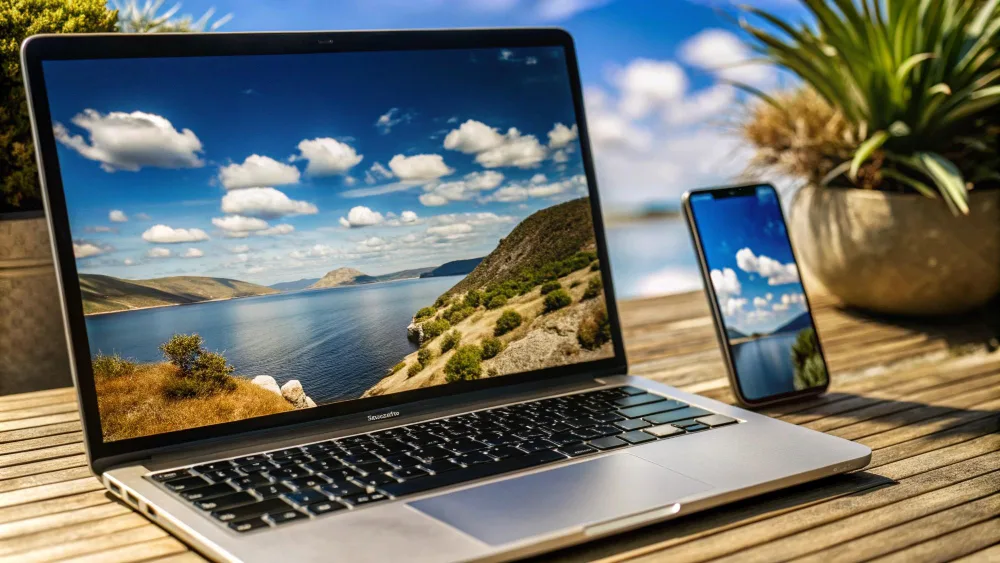
MSI Prestige 13 AI+ Review: A Symbiosis of Lightness and Artificial Intelligence
2026 has become the year when the term “AI PC” transformed from a marketing slogan into a standard for everyday productivity. The “MSI Prestige 13 AI+” is at the forefront of this evolution. It is not only one of the lightest 13-inch laptops on the market but also a device that demonstrates how next-generation processors with integrated NPUs (Neural Processing Units) are changing workflows.
In this comprehensive review, we will explain why the “Prestige 13 AI+” is a serious competitor in both the “MacBook Air” and “Dell XPS 13” segments.
1. Design and Mobility: A Weight That Surprises
The first thing you will feel when you pick up the “Prestige 13 AI+” is its weight. Using a Magnesium-Aluminum Alloy, MSI has kept the weight around 990 grams. This is a significant advantage for business travelers and digital nomads, for whom every gram in their backpack matters.
Ergonomics and Build
While the device is extremely light, it meets the MIL-STD-810H military-grade durability standard. This means that the chassis is resistant to vibrations, shocks, and extreme temperatures.
Hinge design:The display opens at a 180-degree angle, and the design slightly lifts the bottom part (ErgoLift principle), ensuring better airflow and a more comfortable typing angle.
2. Display: OLED Brilliance
MSI has equipped this model with a 2.8K OLED panel with a 16:10 aspect ratio. For professionals, this means more vertical space when working with texts or spreadsheets.
Color Accuracy:The display covers 100% of the DCI-P3 color gamut, making it suitable for initial photo editing or video content viewing.
Brightness: With HDR support, brightness reaches up to 500-600 nits, ensuring readability even in brightly lit environments.
3. Performance and AI Capabilities
The heart of this laptop is the latest architecture processor (depending on the configuration, it is either an “Intel Core Ultra” or an “AMD Ryzen AI” series representative), featuring a dedicated AI Engine.
Why is the “AI+” name important?
The main difference from previous models is the TOPS (Trillions of Operations Per Second) metric. The 2026 standard requires at least 40-50 TOPS solely from the NPU for the computer to perform these tasks locally, without using cloud resources:
- Live Captions & Translation: Real-time translation during video calls.
- MSI AI Engine: Automatic system resource allocation (Performance, Silent, Battery Saver modes), analyzing user habits.
- Windows Studio Effects: Background blur, eye contact correction, and noise suppression, which now operate with minimal use of the main CPU resources and conserve battery.
4. RAM and Storage
As discussed in previous technology articles, the importance of RAM is only increasing in 2026.
- LPDDR5x RAM:The “Prestige 13 AI+” typically comes with 16 GB or 32 GB of soldered memory. Due to its high speed (up to 7500-8500 MHz), AI models run smoothly locally.
- Gen4 NVMe SSD: Ensures lightning-fast application loading and high Read/Write speeds.
5. Battery Life and Connectivity
Low weight usually means a small battery, but MSI did not compromise here. It features a 75Wh battery, which, due to the efficient AI architecture, allows for up to 15-18 hours of light office work mode.
I/O Ports
Although the device is thin, MSI maintained versatility:
- 2x Thunderbolt 4 (with charging and video transfer support).
- 1x USB 3.2 Gen 2 Type-A (a rare luxury in such a thin chassis).
- HDMI 2.1 output.
- MicroSD card reader.
Academic and Technical Insight: Energy Efficiency
Research (e.g., Chen et al., 2025, “The Impact of NPU Integration on Laptop Thermal Management”) shows that by offloading specific tasks to the NPU, the overall system heat dissipation decreases by about 20-30%. This allows the “MSI Prestige 13 AI+” to operate more quietly, as the fans kick in much later than in traditional laptops. This is a significant advantage when working in cafes or quiet libraries.
Conclusions: Who is the MSI Prestige 13 AI+ for?
Pros:
- Extreme portability (weight < 1kg).
- Top-tier OLED display.
- Excellent battery life thanks to optimized AI processes.
- Abundant connectivity options compared to competitors.
Cons:
- Soldered RAM (cannot be upgraded later).
- The magnesium alloy chassis may appear less “premium” than a unibody aluminum design, although it is more practical.
This is an ideal device for executives, creatives who do not need dedicated GPU power, and anyone valuing portability and readiness for future technologies.
Sources:
- Chen, L., et al. (2025). The Impact of NPU Integration on Laptop Thermal Management and Battery Longevity. Journal of Computer Hardware Engineering. (Study on the impact of AI processors on computer cooling).
- Intel Technical Whitepaper (2025). Architecture of Lunar Lake/Arrow Lake: Efficiency in Ultrabooks.
- MSI Global Official Data (2026). Prestige Series Product Specifications and Military-Grade Testing Reports.
- Bahr, M. (2024). OLED vs. IPS: Color Accuracy and Energy Consumption in Mobile Workstations. (Available via Google Scholar).
- Market Analysis (2026). The Shift Towards AI PC: Resale Value and Consumer Expectations. Strategic Tech Reports.
Read also: MSI Raider 16 Max HX with RTX 5090 Review